Glass is one of the most widely used and oldest materials that humanity has employed for thousands of years in architecture, decoration, and various industries. With technological advancements, glass production methods have also evolved to deliver a product with higher quality and broader applications. Solid Glass is one of these significant achievements in the glass industry, which, due to its excellent surface quality and transparency, has captured a large share of the market. In this article, we will thoroughly explore what solid glass is, how it is produced, its features and applications, and what to consider when purchasing it.
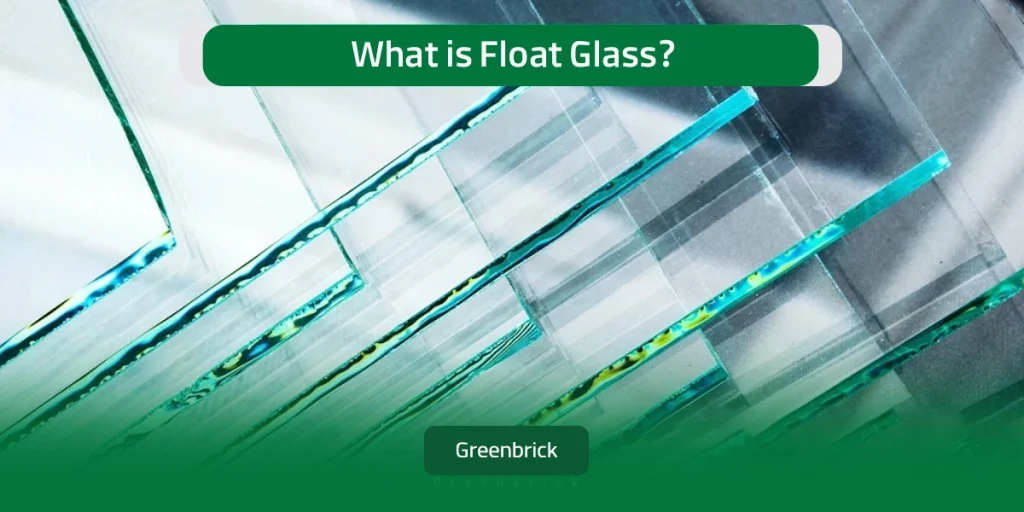
Solid glass is a type of flat, smooth glass produced in factories using the “floating on molten tin” technology. In this method, raw glass materials (silica sand, sodium carbonate, limestone, and other additives) are melted in a furnace and continuously poured onto a layer of molten tin. Due to its higher density, tin allows the glass to float on it as a perfectly flat sheet, achieving uniform thickness and quality.
This process, known as the Float Process, revolutionized the glass industry and replaced older methods.
Before the invention of the float process, flat glasses were produced by methods such as drawing or casting, which often resulted in wavy or uneven surfaces. In 1959, the British company Pilkington introduced the glass floatation process on molten tin for the first time. This technology rapidly spread worldwide, and today, almost all architectural and industrial glasses are produced using this method.
The solid glass production method (Float Process) is a continuous and precise process consisting of several main stages:
The main raw materials for solid glass are:
Silica Sand (SiO₂) – the primary glass-forming material
Sodium Carbonate (Na₂CO₃) – lowers the melting point of silica
Limestone (CaCO₃) – improves chemical and mechanical resistance
Dolomite (CaMg(CO₃)₂) – enhances thermal stability
Additives and Cullet (recycled glass) – aids faster melting and reduces energy consumption
The raw materials are precisely weighed by computer-controlled systems and thoroughly mixed in large mixers.
The raw material mixture is fed into furnaces at temperatures around 1500 to 1600°C.
At this temperature:
The materials melt into a clear, molten state.
Trapped gases are expelled from the glass.
A homogeneous chemical composition is achieved.
This is the core of the process:
Molten glass is transferred from the furnace to a bath containing molten tin.
Because tin has a higher density than glass, the glass floats on its surface.
As it moves slowly over the tin, the glass becomes perfectly flat and achieves uniform thickness.
The final glass thickness is determined by controlling the speed of movement and tension at this stage (e.g., thinner glass is produced with greater tension).
The newly formed glass is still very hot and fragile. If cooled suddenly, internal stresses cause cracking.
In this stage, the glass is gradually cooled from about 600°C down to ambient temperature.
This process takes place in a long tunnel called a Lehr.
The goal of this stage is to eliminate thermal stresses and increase the glass’s durability.
After complete cooling:
The glass is cut into standard dimensions (e.g., 3.2 × 2.2 meters or larger) by automated machines.
The edges are polished or ground to prevent chipping or micro-cracks.
Before packaging, the glass is checked for:
Transparency
Waviness or bubbles
Thickness uniformity
Physical defects (scratches, chips)
by both human operators and automated systems.
The glass sheets are packed in bundles using:
Anti-scratch paper
Wooden or metal pallets
Strong strapping bands
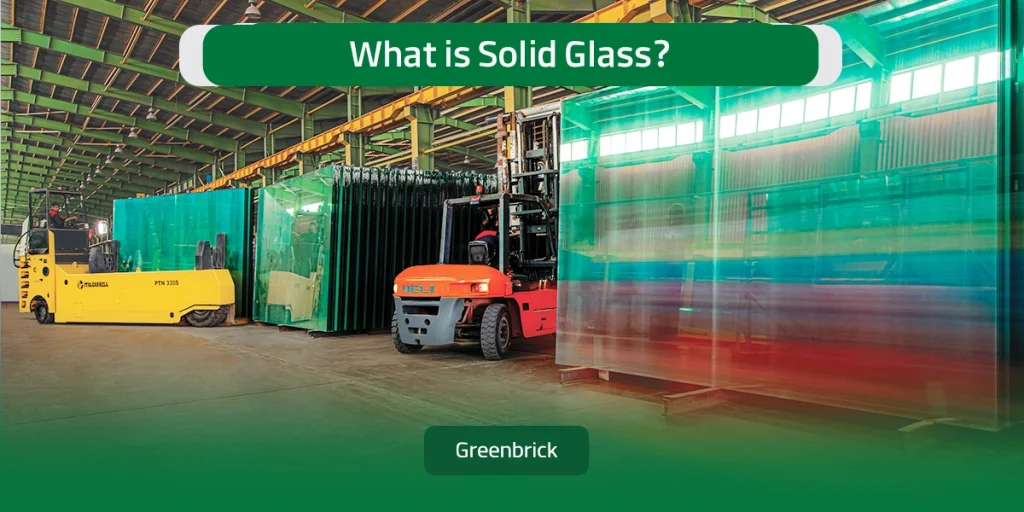
and are then ready for shipment to workshops, processing plants, or project sites.
Solid glass differs significantly in both appearance and technical properties from glasses produced by older methods. These characteristics are a direct result of the floating-on-molten-tin process, which gives the glass exceptionally high optical and dimensional quality.
In the solid glass production method, molten glass moves over molten tin and becomes naturally flat without the need for pressure or molding.
Result: when looking through the glass, objects appear completely undistorted.
This feature is crucial for making mirrors, glass facades, and display windows.
Due to the precise raw material composition and controlled production process, solid glass transmits light at about 85 to 90%.
Transparency depends on thickness and iron oxide content. The thicker the glass, the more pronounced the greenish tint becomes (except for ultra-clear Low Iron glass).
Solid glass thickness is controlled by adjusting the pulling speed over the tin.
This uniformity ensures that subsequent processing such as tempering or laminating yields consistent and predictable final product quality.
Solid glass is typically produced in standard sizes such as 3.2×2.2 meters or even 6×3.2 meters.
Large dimensions make it ideal for projects such as monolithic facades or wide display windows.
Raw solid glass is relatively fragile, but it can be processed for greater strength or aesthetics:
Tempering (Tempered) → enhances impact and heat resistance
Laminating (Laminated) → increases safety and prevents shattering upon breakage
Sandblasting and Acid Etching → creates frosted or patterned surfaces
Ceramic Frit Printing → applies permanent designs and colors to the glass
During the melting stage, various colors such as gray, bronze, green, and blue can be achieved by adding metal oxides.
After production, reflective or Low-E coatings can be applied by depositing metal oxides to control energy transfer.
Raw solid glass is sensitive to thermal shock, but thanks to the annealing stage that removes internal stresses, it remains stable under moderate temperature fluctuations.
For greater heat resistance, tempering is required.
Solid glass has standard flexural and compressive strength, which varies with thickness.
Its raw strength is lower than tempered glass but sufficient for most ordinary applications.
Solid glass is resistant to moisture, mild chemicals, and UV radiation.
Under normal weather conditions, it does not discolor or become cloudy.
Solid glass is essentially a base product that can be further processed or colored in various ways to suit different applications. Below, the most common types of solid glass are explained in detail.
Features:
Natural glass color (clear with a faint greenish tint)
High light transmission (approximately 85–90% depending on thickness)
No waviness or optical distortion
Common thicknesses: 2 to 19 mm
Applications:
Standard windows and doors
Storefront display windows
Tables and decorative glass
Base glass for mirrors and tempered glass production
Features:
Metal oxides added during melting produce the color.
Colors: gray, bronze, green, blue, etc.
Reduces solar radiation and absorbs part of the thermal energy
Lower light transmission than clear glass (depending on color and thickness)
Applications:
Glass facades for solar control
Double-glazed windows in tropical regions
Interior design and decoration with a special aesthetic
Features:
The glass surface is frosted by acid or sandblasting.
Transmits light without image clarity (privacy preservation)
Printable and engravable with patterns on the frosted surface
Applications:
Office partitions
Interior bathroom or restroom doors
Interior decoration and artistic glass
Features:
Has a nanometric coating of metal or metal oxide to reduce heat transfer
Retains interior heat in winter and prevents heat ingress in summer
Optimizes building energy consumption
Applications:
Residential and office buildings with energy standards
Double-glazed or triple-glazed windows
Features:
Metal oxide coating that reflects light and heat
Creates a mirror-like appearance during the day while maintaining visibility from inside out
Reduces glare and absorbs part of solar energy
Applications:
Modern building facades
Windows facing intense sunlight
Office and commercial buildings
Features:
Thickness of 15 to 19 mm or more
Very high mechanical strength
Suitable for specific processing (laminating, tempering)
Applications:
Glass floors and glass bridges
Burglar-resistant display windows
Large aquariums
Features:
Removes a large portion of iron oxide to reduce the greenish tint
Significantly higher clarity than ordinary glass
Light transmission over 91%
Applications:
Jewelry display cases
Museums and exhibition spaces
Luxury projects and special facades
| Specification | Description |
|---|---|
| Product Type | Solid Glass (Float Glass) |
| Raw Materials | Silica sand, sodium carbonate, limestone, dolomite, recycled glass (cullet) |
| Production Method | Floating molten glass on molten tin (Float Process) |
| Standard Thicknesses | 2, 3, 4, 5, 6, 8, 10, 12, 15, 19 mm |
| Standard Dimensions | 3.2×2.2 m, 6×3.2 m (customizable) |
| Light Transmission (Clear) | 85 to 90% (depending on thickness) |
| Available Colors | Clear, gray, bronze, green, blue, ultra-clear (Low Iron) |
| Optical Property | Waveless and distortion-free, high image clarity |
| Thermal Resistance (Raw) | Up to about 60–70°C (temperature differential) |
| Processable Options | Tempering, laminating, sandblasting, acid etching, ceramic frit printing |
| Applications | Facades, windows, partitions, mirror-making, display cases, tables, decorative glass |
| Durability | High resistance to UV, moisture, and normal weather conditions |
Glass Curtain Wall Facades
Windows and Glass Doors
High-Quality Mirror Manufacturing
Interior Partitions and Glass Walls
Tables, Display Cases, and Decorative Glass
Production of Tempered and Laminated Glass for enhanced safety
High optical and visual quality
Flat surface with no distortion
Versatile processing capabilities
Suitable for modern architectural projects
Brittleness in its raw state
Heat and sound transmission (unless coatings or processing are applied)
Selecting the Right Thickness: For facades and windows, thicknesses of 4 to 8 mm are common; for floors and special structures, higher thicknesses are used.
Reputable Brand: There are both domestic and foreign manufacturers with varying quality; choosing a reputable brand is important.
Type of Processing: If safety and strength are priorities, be sure to use tempered or laminated glass.
Color and Coating Type: Should be chosen based on climate conditions and the amount of ambient light.
Solid glass holds a special place in the glass industry due to its perfectly flat surface, high optical transparency, and versatility for a wide range of projects. Produced with the advanced floatation-on-tin technology, this type of glass—thanks to its uniform thickness and absence of waviness—is an ideal choice for building facades, windows, interior partitions, storefront display cases, and even high-quality mirror manufacturing.
One of the most important reasons for solid glass’s popularity is its processability; it can be transformed into tempered glass for high strength, laminated glass for enhanced safety, or decorative glass for aesthetic appeal. Furthermore, this glass is available in various thicknesses, dimensions, and even colors, offering architects, interior designers, and craftsmen the diversity needed to meet a wide array of requirements.
Understanding the features, types, and applications of solid glass helps you, when purchasing, choose the appropriate thickness, processing type, and color according to your project’s conditions. This knowledge not only ensures quality and durability but also leads to cost savings and the best possible final outcome.