

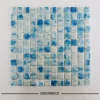

Comprehensive Guide to Buying and Pricing Pool Tiles
Choosing a pool tile is one of the most sensitive and specialized stages in building or renovating pools, jacuzzis, and wet areas. The pool covering should not only visually create a relaxing and beautiful space, but must also technically possess the highest standards of resistance to water and chemicals. At Khesht Sabz, we provide you with everything you need to know, compare, and buy the best pool tiles and ceramics.
What is a pool tile and how is it different from regular tile?
The biggest mistake in pool construction is using regular tiles instead of specialized products. The main difference between regular tiles and ceramics and the pool type is their level of insulation against water. Regular tiles have no resistance to water penetration and will have a very short lifespan if used in pools.
When high-quality, standard types are used, the lifespan of these products can be 15 to 20 years. To understand this difference, you can perform a simple test: if you place both tiles (regular and pool) backside up and put a few drops of water on them, the water is immediately absorbed by the regular tile. However, this water remains on the back of the pool tile and is not absorbed.
Features of a standard pool tile and ceramic
When purchasing, your chosen product must have the following technical features:
-
Near-zero water absorption: The most important feature of a suitable pool ceramic is non-absorption of water, which in standard models is less than 0.5%.
-
High chemical resistance: The glaze of these tiles must be completely resistant to chlorine and other pool disinfectants and must not change color.
-
Freeze-thaw resistance: In outdoor pools and cold regions, resistance to freezing prevents breakage and separation of the tile from the surface due to weather changes.
-
Anti-slip properties: Especially around the pool and areas that are constantly wet, using matte and rough tiles to prevent slipping is mandatory.
Types of pool tiles based on material and installation location
Pools, depending on the design and need, use different coverings:
-
Porcelain and ceramic pool tiles: The most widely used type with a dense structure and near-zero water absorption, which has very high resistance to pressure and impact and is considered the best choice for the pool floor.
-
Glass pool tiles: This type of tile is made with a glass glaze and has more shine, generally used for the walls of the pool.
-
Miniature pool tiles (mosaic): Have small dimensions such as 2×2 or 2.5×2.5 cm and are usually supplied on mesh. These models have high flexibility and are ideal for curved surfaces, corners, and jacuzzi edges.
-
Large format tiles: Have dimensions such as 30×60 or 30×90 cm and are used for modern, rectangular pools with flat surfaces, creating a luxurious and integrated look.
Warning: The difference between “Pool Tile” and “Pool-Design Tile”
It is very important to know that some products are marketed under the title “pool-design tiles” which only look similar to pool tiles. These products are not necessarily suitable for direct and permanent immersion in water and will not withstand water pressure or chemicals. These tiles are mostly used for interior decoration or bathrooms with a blue theme.
Quick comparison of pool tiles and pool ceramics (porcelain)
Buyers often hesitate between choosing pool tiles and pool ceramics. The table below will help you with this choice:
| Feature | Pool Tile | Pool Ceramic (Porcelain) |
| Water absorption rate |
Low (more suitable for walls and decorative areas) |
Near zero (ideal and resistant for pool floors) |
| Compressive strength and durability |
Standard |
Very high due to greater density |
| Variety of designs and colors |
Very high (glass, miniature, creative artistic patterns) |
Usually uniform, luxurious, and consistent |
| Price |
Usually more economical |
Usually more expensive due to more complex manufacturing process |
Be the first to review “Pool Tile Green9-BF-1095”
Related products
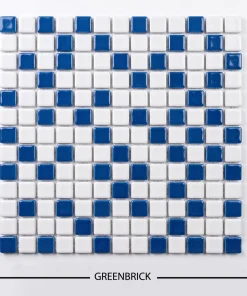
Swimming pool tiles
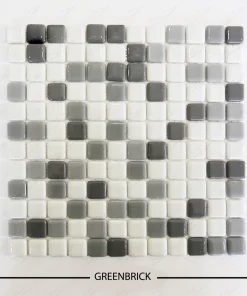
Swimming pool tiles

Swimming pool tiles

Swimming pool tiles
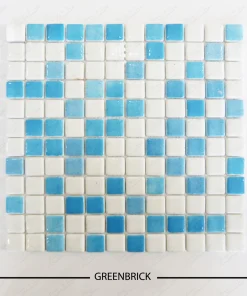
Swimming pool tiles
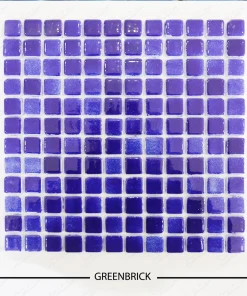
Swimming pool tiles
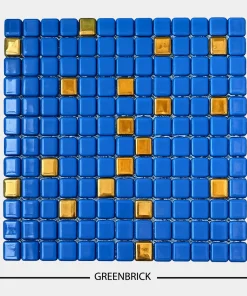
Swimming pool tiles
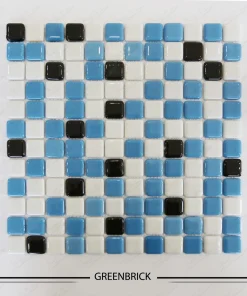
Swimming pool tiles
Reviews
There are no reviews yet.